Tuesday, May 26, 2009

66 Tattoo Canvases Wanted for Immortal Tattoos upcoming Event. If you think you can be part of it. Why wait? Just email me !!

Tattoos are charged at ONLY $50 per session. If the tattoo can be completed in one sitting, its still ONLY $50 !!

Minimum size of Tattoo must be of 15cm in height. But if you want to do something smaller and if you think its a good design, just let me know.

The canvases who are undergoing work progress by me CANNOT apply for this event.

If you are interested do email me : Immortal_Tattoos@mail.com

Additional Info : 5 Females are needed for inking. Tattoos are done for free. U must be able to model for photo shoot. We don't want shy ladies. Do email me if you have any questions.

Thank u all for your time.

PS: This event is held in Singapore only.


Once upon an infernal time,
Existed a circus created by hell’s own grime
The circus bred freaks that thrived on pain,
Thereby giving it, its sordid name.

In the carnival of pain, lived a freak,
Whose daily pain made the guillotine seem meek.
Diamond fangs, the condemned called him,
The Grand Meister, of the Carnival of eternal Sin
And the pain he felt, he transferred to ink,
With which he marked bodies till raw and pink.

This blasphemy provoked higher beings,
Till even God deferred; and the Devil Intervened.
Black, angry and searing pains he felt,
Of kinds which make hardest stones melt,

Voices of those past inked, echoed painfully
Right through Diamond Fang’s head; throbbing violently.
The creature thought, for sure he’ll explode,
For minions of hell destroyed his abode.
Scorched his eyes, and flayed his body
Until his tainted soul was ripped all bloody.

Thus when he was about to break,
The visions cleared and a voice thus spake,
From its high throne of gory splendor,
Said the Devil with glistening evil ardor,

“You’ve breached the codes of heaven and hell,
For this torrid sin, repent you shall.
66 irredeemable sinners you must find,
And mark them with the ink of thine,
Then only will your soul mend,
And back to your Carnival, you may tend.

Break me this chain of human sacrifice,
And your soul can never survive
So go forth my insolent son,
your quest of 66 sinners has now begun".

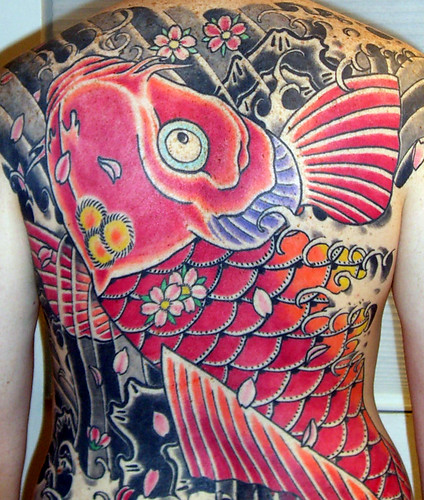
Wednesday, May 20, 2009

Monday, May 18, 2009

Koi tatto three years old in 2007

fish pictures 2007 models

The Japanese Drago Tattoo

dragons with a sword in a circle in

Japanese Drago Tattoo Meanings

abstract images in the body of Japanese man

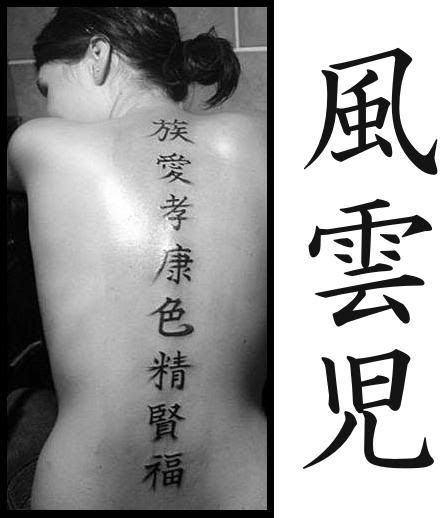
Best Kenji Tattoo


kenji writing behind the Japanese woman's body

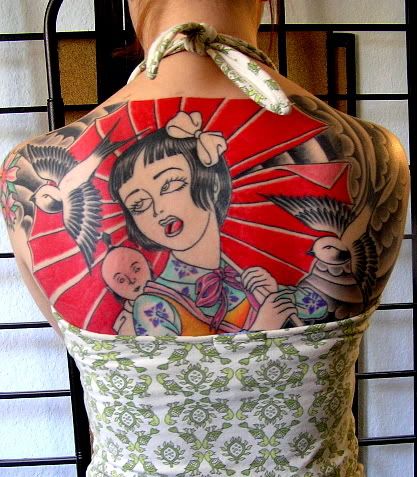
Girl with Japanese Tattoo

Japanese women carry pictures of fan tattoos on a woman's body

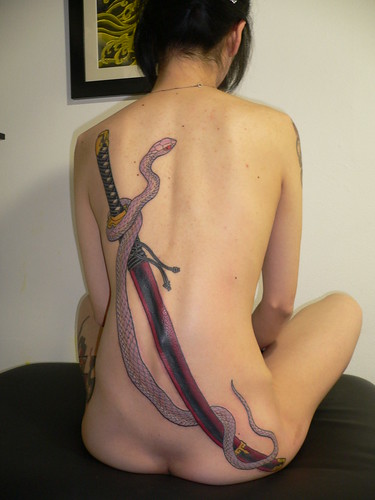
Samurai Tattii Art Design

tattoo with pictures of snakes around his sword

Koi tattoos sexy at women upper back

tattoo on shoulder

Koi fish


tattoo on the body with pictures of fish

re wearing a tattoo


according to a group of tattooed womanhood throughout the body can increase the passion in life, so she was giving up his body in the tub with a diverse models

Cheryl Tweedy Cole Tattoo


tattoo on the thighs add to the beauty of a woman's body

The yakuza Japanese Tattoo Art

Align Center


Japanese tattoo art has a lot of names - irezumi and horimono in the Japanese language. Irezumi is the word meant for the basic visible ink covering huge parts of the body like the back. Japanese tattoo art has a extremely extensive tradition.
Since the influence of Confucianism and Buddhism over the Japanese culture, tattoo art has a damaging connotation for the majority of the Japanese individuals. In the eyes of an ordinary Japanese a ink is considered a mark of a yakuza - a member of the Japanese mafia - and a macho emblem of members of the lesser classes.

The Early History of Japanese Tattoo Art
Archaeologists believe that the initial settlers of Japan, the Ainu citizens, used facial tattoos. Chinese papers tell concerning the Wa inhabitants - the Chinese name meant for their Japanese neighbours - and the individuals lifestyle of diving into water for fish and shells and decorating the total skin with tattoos. These reports are in the region of 1700 years old.

For the superior developed Chinese culture, tattooing was a barbaric undertaking. As soon as Buddhism was brought from China to Japan and with it the solid influence of the Chinese culture, tattooing got destructive connotations. Criminals were marked with tattoos to punish and identify them within society.

Tattoos in the Edo Period
In the Edo period - 1603-1868 - Japanese tattoo drawings became a part of ukiyo-e - the suspended world culture. Prostitutes - yujos - of the pleasure quarters used tattoos to improve the individuals appeal for customers. Skin tattoos were furthermore used by labourers and firemen.

From 1720 on, the tattooing of criminals became an formal punishment and replaced taking away of the nose and the ears. The criminal received a ring ink around the arm in support of every offence or else a character ink on his temple. Tattooing criminals was continued until 1870, at what time it was abolished by the new Meiji government of the Japanese Emperor.
This visible punishment produced a further genre of outcasts which had no place taking part in society and nowhere to go. A lot of these outlaws were ronin - master less samurai warriors. They had no alternatives than organizing gangs. These men created the start of the yakuza - the controlled criminals inside Japan inside the twentieth century.

Japanese Tattoo Prints
In 1827 the ukiyo-e artist Kuniyoshi Utagawa published the original 6 emblems of the 108 Heroes of the Suikoden. The Suikoden were something like ancient Robin Hoods - honourable bandits. The story is based on a classic Chinese novel - Shui-Hi-Chuan, which dates from the 13th and 14th century. The novel was initially translated into Japanese in 1757 by Okajima Kanzanion. By the turn of the 18th to the 19th century the story was available with illustrations by Katsushika Hokusai. The novel of the 108 honourable bandits was extremely accepted in the sphere of Japan and created a kind of Suikoden trend amongst Japanese towns inhabitants.

Kuniyoshi's Suikoden ukiyo-e emblems bare the heroes in colourful, detailed body tattoos. Japanese ink prints and tattoo drawings in general at that moment became stylish. Tattoos were considered iki - cool - however were restricted to the poorer classes.
The richness and fantasy of the Japanese tattoo print emblems made known by Kuniyoshi are used by a quantity of ink artists up to this generation.

The Meiji Restoration until Postwar Japan
Within its strive to adopt Western civilizations, the Imperial Meiji government outlawed tattooing as something thought about a barbaric relict of the past. The funny thing was that the Japanese irezumi artists right away got brand new customers - the sailors from the foreign ships anchoring inside Japanese harbours. As a consequence Japanese ink designs was spread to the West.
In the course of the first half of the twentieth century, horimono remained a forbidden art form until 1948, as soon as the prevention was officially lifted. A few say that this step had become crucial to permit the demand by soldiers of the American occupation forces for horimono and irezumi.

Tattoo Art in Modern Japan
A number of younger individuals may well think about tattooing being cool, the majority of the Japanese population still considers it while something connected to the gangland of mafia gangsters and a rough low caste tradition at the finest. Younger folks who consider tattoos as iki - a marginal amongst Japanese youth - tend to use partial tattoos inside Western style on the persons upper arms, someplace it is not directly visible

2009 Women Style Tattoo

japanese tattoo art design with farious symbol design

japanese tattoo art design with farious symbol designjapanese tattoo art design with farious symbol design

men with japanese tattoo fullbody picture

men with japanese tattoo fullbody picturemen with japanese tattoo fullbody picture 1


men with japanese tattoo fullbody picturemen with japanese tattoo fullbody picture 2

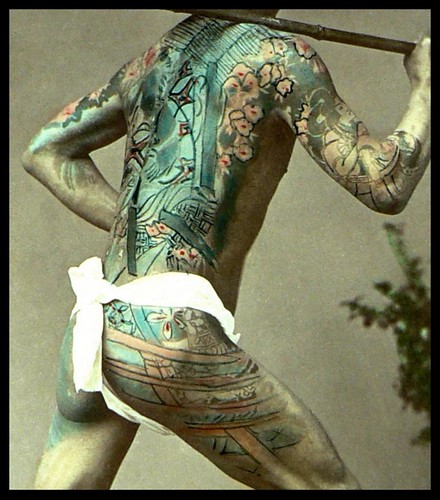
THE OLD JAPANESE TATTOO -- Art and Artifice in the Camera

Ca.1885-1895, 8" x 10" hand-tinted albumen photograph, by unknown Japanese photographer.

The above photo is all about the what you see on the man's LOWER BACK.

My last post of two Japanese gentlemen and their "full body" tattoos brought up a chain of comments that brought the authenticity of the hand-colored images under question. Specifically, the possibility that these old photos of Tattooed Postmen and etc are FAKE --- that is, the crude (and sometimes flowery) designs possibly being a complete fabrication by the studio colorist, applied to UN-TATTOED bodies of male studio models.

Although my own examination under a lens showed the occasional "trace" of something really there, the hand-tinting often overwhelmed it.

I had been taught long ago that certain emulsions used during the Meiji era had a low sensitivity to certain blue colors and pigments, thus diminishing the photographic impact of the designs done by the tattoo artists of old Japan. HAND TINTING the image was the only way to make it presentable for sale.

Well, I dug and dug, and finally came up with the answer (of sorts).

About 20 years ago, when I picked this large albumen up, the first thing I thought was "........Well, this is pretty cool. Too bad I will never be able to use because SOMEBODY WASHED THE CHEAP COLORING JOB OFF THE MIDDLE OF IT WHEN THEY TRIED TO CLEAN THE PHOTO. To bad. What a waste. Otherwise, it might have been useful for publication or show......"

THE JAPANESE TATTOO


FOR THOSE WHOSE INTERESTS TOUCH ON THE THREE-FOLD WORLD OF ART, PHOTOGRAPHY, and the TATTOO, this series is just for you. Their appearance here on flickr is the first time they are being "published" together as a group.

The yakuza Japanese Tattoo Art


Japanese tattoo art has a lot of names - irezumi and horimono in the Japanese language. Irezumi is the word meant for the basic visible ink covering huge parts of the body like the back. Japanese tattoo art has a extremely extensive tradition.
Since the influence of Confucianism and Buddhism over the Japanese culture, tattoo art has a damaging connotation for the majority of the Japanese individuals. In the eyes of an ordinary Japanese a ink is considered a mark of a yakuza - a member of the Japanese mafia - and a macho emblem of members of the lesser classes.

The Early History of Japanese Tattoo Art
Archaeologists believe that the initial settlers of Japan, the Ainu citizens, used facial tattoos. Chinese papers tell concerning the Wa inhabitants - the Chinese name meant for their Japanese neighbours - and the individuals lifestyle of diving into water for fish and shells and decorating the total skin with tattoos. These reports are in the region of 1700 years old.

For the superior developed Chinese culture, tattooing was a barbaric undertaking. As soon as Buddhism was brought from China to Japan and with it the solid influence of the Chinese culture, tattooing got destructive connotations. Criminals were marked with tattoos to punish and identify them within society.

Tattoos in the Edo Period
In the Edo period - 1603-1868 - Japanese tattoo drawings became a part of ukiyo-e - the suspended world culture. Prostitutes - yujos - of the pleasure quarters used tattoos to improve the individuals appeal for customers. Skin tattoos were furthermore used by labourers and firemen.

From 1720 on, the tattooing of criminals became an formal punishment and replaced taking away of the nose and the ears. The criminal received a ring ink around the arm in support of every offence or else a character ink on his temple. Tattooing criminals was continued until 1870, at what time it was abolished by the new Meiji government of the Japanese Emperor.
This visible punishment produced a further genre of outcasts which had no place taking part in society and nowhere to go. A lot of these outlaws were ronin - master less samurai warriors. They had no alternatives than organizing gangs. These men created the start of the yakuza - the controlled criminals inside Japan inside the twentieth century.

Japanese Tattoo Prints
In 1827 the ukiyo-e artist Kuniyoshi Utagawa published the original 6 emblems of the 108 Heroes of the Suikoden. The Suikoden were something like ancient Robin Hoods - honourable bandits. The story is based on a classic Chinese novel - Shui-Hi-Chuan, which dates from the 13th and 14th century. The novel was initially translated into Japanese in 1757 by Okajima Kanzanion. By the turn of the 18th to the 19th century the story was available with illustrations by Katsushika Hokusai. The novel of the 108 honourable bandits was extremely accepted in the sphere of Japan and created a kind of Suikoden trend amongst Japanese towns inhabitants.

Kuniyoshi's Suikoden ukiyo-e emblems bare the heroes in colourful, detailed body tattoos. Japanese ink prints and tattoo drawings in general at that moment became stylish. Tattoos were considered iki - cool - however were restricted to the poorer classes.
The richness and fantasy of the Japanese tattoo print emblems made known by Kuniyoshi are used by a quantity of ink artists up to this generation.

The Meiji Restoration until Postwar Japan
Within its strive to adopt Western civilizations, the Imperial Meiji government outlawed tattooing as something thought about a barbaric relict of the past. The funny thing was that the Japanese irezumi artists right away got brand new customers - the sailors from the foreign ships anchoring inside Japanese harbours. As a consequence Japanese ink designs was spread to the West.
In the course of the first half of the twentieth century, horimono remained a forbidden art form until 1948, as soon as the prevention was officially lifted. A few say that this step had become crucial to permit the demand by soldiers of the American occupation forces for horimono and irezumi.

Tattoo Art in Modern Japan
A number of younger individuals may well think about tattooing being cool, the majority of the Japanese population still considers it while something connected to the gangland of mafia gangsters and a rough low caste tradition at the finest. Younger folks who consider tattoos as iki - a marginal amongst Japanese youth - tend to use partial tattoos inside Western style on the persons upper arms, someplace it is not directly visible

Tattoo Symbols

Japanese Tattoo Symbols
By Muhibbi
Are you thinking about getting a Japanese tattoo design or aJAPANESE TATTOO SYMBOLS cursive tattoo, whatever design or idea you have for your tattoo make sure that you research it properly and think long and hard before you reach your decision because it will be with you for life.
Research is the key. Some people will spend month's searching for that elusive tattoo picture. Very popular is a bushido Japanese legacy tattoo or a Japanese symbol tattoo.
Research your tattoo thoroughly using tattoo parlor's and of course the internet which will provide you with a wealth of knowledge for your tattoo design, and also translation services for Japanese tattoo writing only after you have completed this can you search out your tattoo artist.

Now that you have selected your Japanese tattoo symbol you can begin to search for a tattoo artist worthy of creating your masterpiece. This can be difficult, please don't walk in to the first tattoo parlor you find, again research is paramount. Ask friends who already have tattoos! Ask them what the shop was like , was it clean, what was the artist like, visit them yourself, show them your tattoo design or Japanese tattoo writing get them to draw it for you so you can see what your tattoo will look like with their particular style.
Remember research is the key to your happiness with your tattoo.

Taurus Tribal Tattoo Symbols - Tips on Your New Tattoo
By Dean Olmstead

So you've made the decision that you want a Taurus tribal tattoo symbol asZODIAC TATTOO SYMBOLS your new body art, but have you put much time into considering the research that needs to be done beforehand? Getting inked can be an expensive proposition, so taking the appropriate time to find the right piece of art work can make all the difference between a decent tattoo and a fantastic tattoo. There are so many free places to get tribal tattoo artwork, but you run the scary risk of copying someone's design. And you are getting this tattoo to stand out, right?
Taurus is the Second Sign of the Zodiac, and is represented by the bull, often prized for strength and vigor. Taurus wants the good things in life. It is easy to see why the symbol of Taurus would make a wonderful choice for your new tattoo.
I highly recommend using a pay site to do your research on your new tattoo. A little money spent beforehand can save you a lot of money in the long run by allowing you to find the right artwork for you and your personality.

free temporary tattoo designs image on

free temporary tattoo designs
Art Tattoo Tribal colaco


Royalty Free Images, Flower, Kanji, Japanese, lower back,
image on free temporary tattoo designs

Flower Tattoo Designs from the Popular Hawaiian Islands

While being in Honolulu Hawaii for Christmas vacation I noticed the many different tattoo designs that are prevalent here. Any kind of flower or tribal tattoo can be found on most natives to Hawaii. What is in a tattoo design? Some of the most popular tattoos are the Hibiscus flower, usually a red or yellow flower with a few pedals surrounding the middle seed. This flower is a popular design and coexists with the rose tattoo. If you are looking for a flower tattoo you probably cannot go wrong with a Hibiscus flower, second to the rose. If you don't know what one looks like do a little image search on a popular search engine and you are bound to have many results.

After being in Hawaii for 10 days it has opened my eyes up to the massive amount of tattoo designs there are in the world. I have never seen so many different kinds of tattoos, it almost seems like everyone on the island had a tattoo of some sort. My friend stayed an extra 2 weeks and it so happens that he just got an arm band tattoo. Of course he did not get a flower but went with the tribal design. Flower tattoos are popular with the natives of the island along with women. You would not see too many guys with flower tattoos unless if it was a fashion statement. Usually a guy will get a tribal design of some sort, almost mimicking a razor design or barbed wire fence.

Are you looking for a tattoo design but don't know where to start? We are researching the many different tattoos that are both popular and uncommon. The rose tattoo is the most popular design but also the Hibiscus Hawaiian flower is becoming a popular pick from tropical areas. Picking the right design is the most important part of the tattoo process otherwise you will spend more money getting a rose tattoo design you do not like removed by lasers.

Sexy Tattoo Galery


This article for help you to chose model and theme tattoo for your sexy body part, its for beauty look and sexy . many kind of tattoo image here and you can chose one and then looking for tattoo artist for tattoing your body.

Sexy Girl And The Rose Tattoo


Death tattoos is a popular tattoos. Death tattoos seem very ominous to most people. But ask anyone who deals with symbolism and they will tell you that death often represents the cycle of life. Death tattoos may not only be a symbol of the life cycle, or an image of Grim Reaper. They may also be a memorial to a lost loved one. Death Tattoos is beautiful art of tattoo.


Tattoo Copyright © 2009 Blogger Template Designed by Bie Blogger Template